Real-Time GPS Tracking: How Live Tracking Works - Traxelio
Concept

Real-Time Tracking

Real-time tracking provides instant location updates, showing where a tracked asset is at any given moment with minimal delay.

What is Real-Time Tracking?

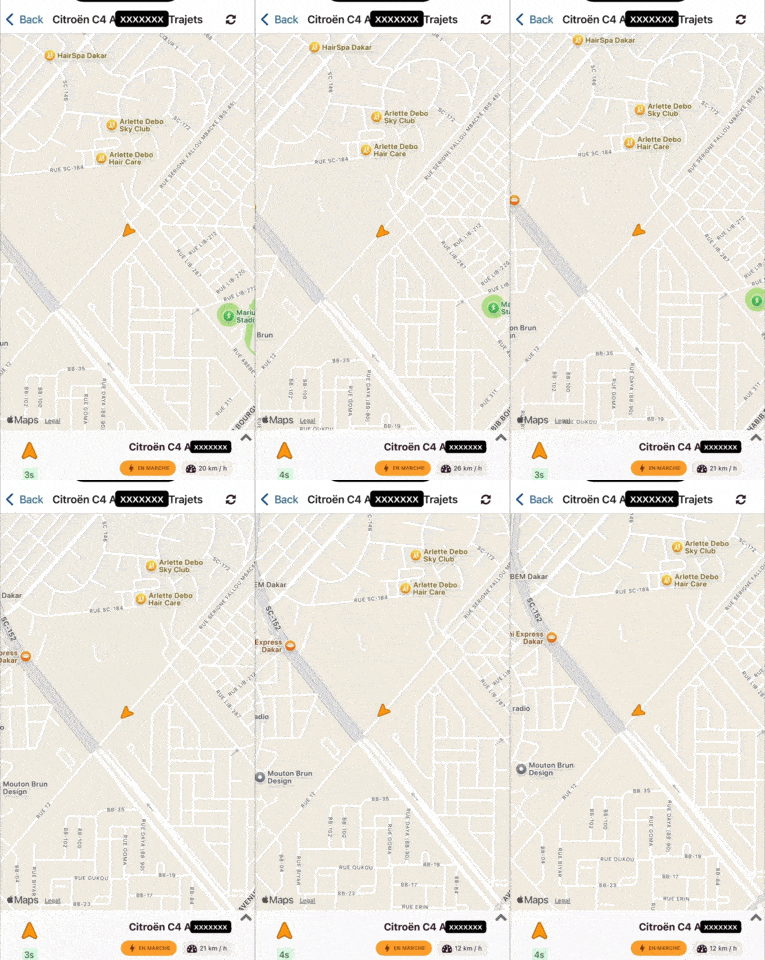
Real-time tracking systems provide location updates with minimal latency, typically every 5-30 seconds when a vehicle is moving. This enables dispatchers to see exactly where their vehicles are, respond quickly to emergencies, provide accurate ETAs to customers, and make dynamic routing decisions based on current conditions.

How it works

  1. GPS tracker acquires satellite signals.
  2. Position is calculated every few seconds.
  3. Data is transmitted immediately over cellular.
  4. Server processes and updates the map.
  5. You see the current location with minimal delay.

Key facts

  • Instant visibility of all vehicle locations
  • Quick response to emergencies or theft
  • Dynamic routing based on current positions
  • Accurate ETAs for customers
  • Better dispatcher decision-making

Frequently Asked Questions

Real-time tracking typically has a delay of 5-30 seconds, depending on the tracker's update interval and network conditions. This is fast enough for dispatching, emergency response, and customer ETAs.
Properly installed hardwired trackers draw minimal power (typically less than a car alarm) and do not significantly impact vehicle battery life. OBD2 trackers may draw slightly more but are still very efficient.

Related

Continue Reading

In Practice

Traxelio Features Using Real-Time Tracking

Keep Learning

Explore more GPS tracking concepts, technical terms, and practical guides.

T
Trax
Online
Say hello to Trax!