
When managing a fleet of vehicles or even just driving daily, one thing often goes unnoticed: driving behavior directly impacts costs, safety, and vehicle health. Whether it is a delivery van rushing to meet deadlines or a personal car in traffic, bad habits like hard acceleration, sudden braking, and sharp cornering quickly add up to serious issues.
The Problem: Poor Driving Habits Cost More Than You Think
Hard acceleration, sudden braking, and sharp cornering are the three biggest contributors to avoidable fleet expenses:
- Increased fuel consumption: hard acceleration burns significantly more fuel than smooth driving
- Higher maintenance costs: repeated hard braking wears out brake pads and tires faster
- Safety risks: hard cornering can cause accidents, especially on slippery or uneven roads
To put some numbers to it: a hard acceleration event is usually defined as a change of speed of 3.92 m/s² (about 14.11 km/h gained in just one second). While this might not sound dramatic, it puts immense stress on the engine and consumes more fuel than necessary.
Without visibility into these metrics, fleet managers and drivers operate in the dark. They cannot see how their driving habits affect the bigger picture. Data-backed insights from tools like Traxelio change everything.
The Solution: Driver Score
This is where the Driver Score comes in: a single number that tells you a lot about driving habits. Traxelio provides fleet managers and drivers with precise data on hard acceleration, hard braking, and hard cornering events.
What Is a Driver Score?
A Driver Score is a calculated rating based on driving behaviors detected through GPS and telematics data. It takes into account:
- Hard acceleration: quick bursts of speed
- Hard braking: sudden and forceful stops
- Hard cornering: sharp turns taken at high speeds
This score is your report card on driving habits. A low score means aggressive driving. A high score indicates smoother, safer driving.
How Traxelio Measures These Metrics
Our GPS devices detect these events through acceleration sensors and algorithms that measure G-forces:
- A hard acceleration is flagged when acceleration exceeds 0.4g (3.92 m/s², or 14.11 km/h in one second)
- A hard braking event triggers when deceleration happens at the same force
- Hard cornering is detected when a sharp turn creates significant lateral force
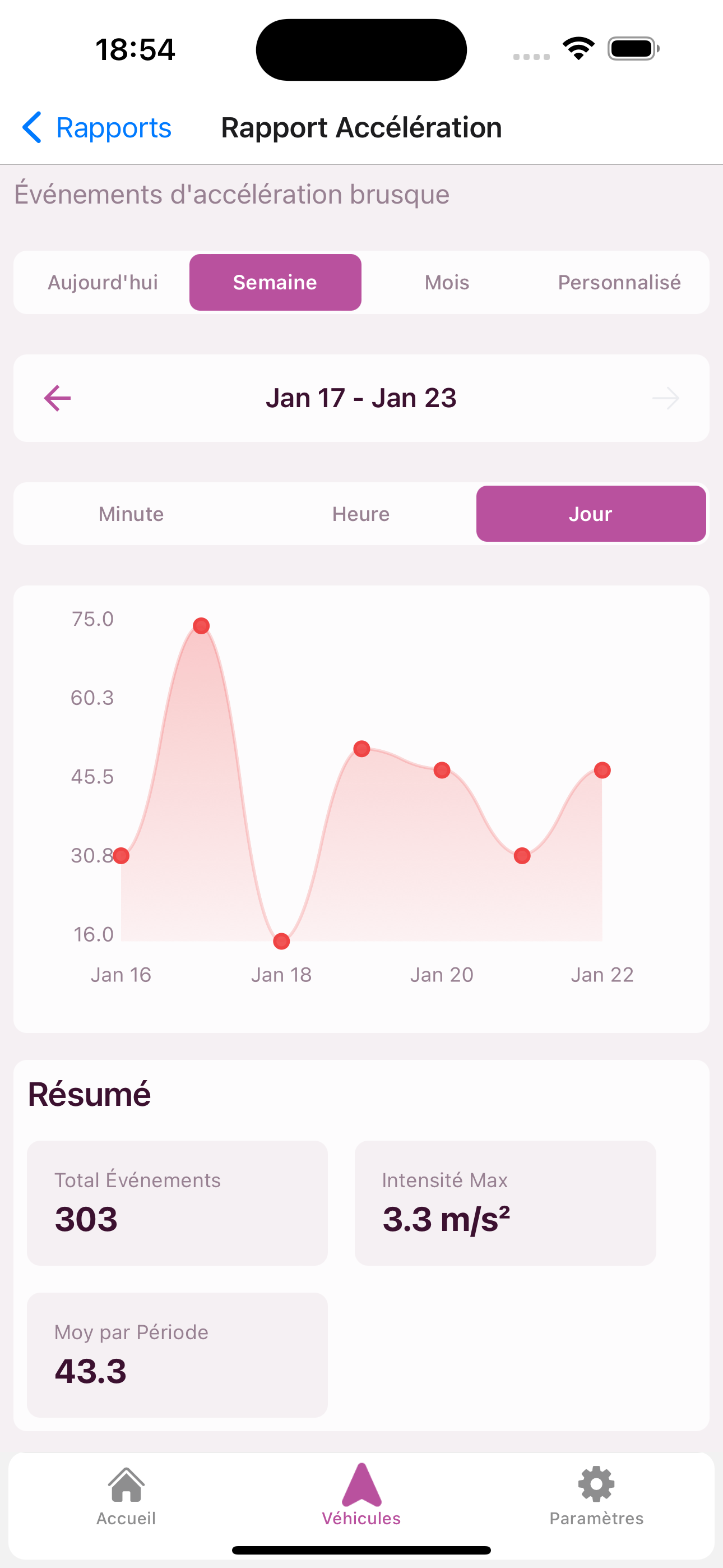
With this data, we provide actionable insights that are easy to understand. You see not just numbers, but practical advice on how to reduce risky habits.
Why It Matters
By understanding these events, you can:
- Save on fuel costs by avoiding unnecessary hard acceleration
- Extend vehicle lifespan by reducing brake and tire wear
- Improve driver safety by encouraging smoother driving
This data is valuable for anyone who drives, from logistics fleet managers to individual car owners.
Results: Better Scores, Safer Roads, Lower Costs
Lower Fuel Consumption
Aggressive driving habits like hard acceleration can increase fuel consumption by up to 30%. With the Driver Score system, drivers can see exactly where they are wasting fuel and adjust their behavior.
Example:
- Driver A had 15 hard acceleration events in one trip, increasing fuel costs by 20%
- After reviewing their score, they reduced it to 5 events per trip, leading to monthly fuel savings of over 120,000 FCFA
Reduced Maintenance Costs
Each hard braking event puts unnecessary stress on brake pads, rotors, and tires. By monitoring these events, fleet managers can schedule proactive maintenance instead of waiting for costly breakdowns.
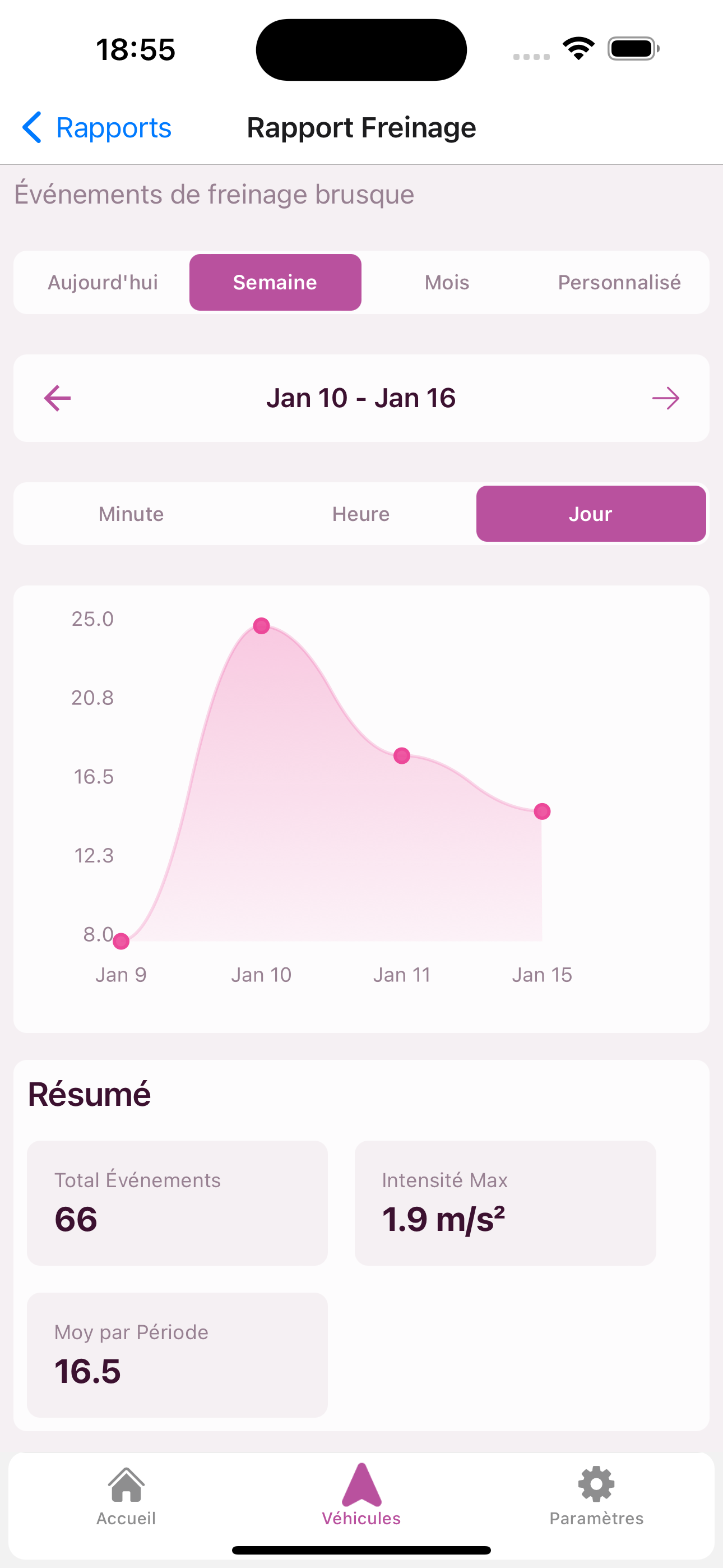
Example:
- Vehicle B showed 30 hard braking events per week
- After implementing Driver Score monitoring, the events dropped to 8 per week, saving significantly on brake replacement costs
Enhanced Safety and Fewer Accidents
Safety is priceless. Sharp cornering and sudden braking increase the risk of accidents. With Driver Score, drivers are more aware of their habits and actively try to improve.
Example:
- Driver C had a Driver Score of 65/100, with frequent hard cornering detected
- After training and feedback, their score improved to 90/100, and incident rates decreased by 40%
Live Alerts and Insights
Traxelio's platform delivers live alerts for these events. Managers can address problems as they happen, and drivers can adjust on the spot.
Who Benefits from Driver Scores?
Fleet Managers
Managing multiple vehicles is a complex task. Driver Scores give fleet managers a clear overview of driving behaviors across their entire fleet. They can identify problem drivers, provide targeted coaching, and ultimately reduce costs.
Logistics and Transport Companies
Efficiency and safety are everything in logistics. Driver Score insights help ensure timely deliveries, reduced fuel waste, and fewer accidents.
Taxi and Ride-Hailing Operators
Passenger safety depends directly on driving quality. Driver Scores help monitor and improve the driving habits of every operator in the fleet.
Construction & Heavy Equipment Operators
Construction vehicles operate under harsh conditions: rough terrain, heavy loads, frequent stops. Driver Score data protects vehicles and equipment from preventable wear · the same hard-acceleration / hard-braking metrics flag the most damaging behaviors.
Individual Drivers
Even without a fleet, a Driver Score helps you become a better driver. It saves you money on fuel, maintenance, and ensures your vehicle stays in top shape for longer.
How Traxelio Simplifies Driver Monitoring
Traxelio's platform makes driver monitoring easy, actionable, and insightful:
- Live data collection: GPS devices capture data on acceleration, braking, and cornering
- Instant analysis: algorithms process the data and calculate the Driver Score
- Clear reports: easy-to-read dashboards showing overall performance, problem areas, and improvement tips
- Actionable alerts: get notified instantly about unsafe events
Example alert: "Hard Braking Alert: Vehicle X just had 3 hard braking events in 10 minutes. Review immediately."
Concrete Example: How a Driver Score Is Calculated
Consider a driver covering 200 km in one day:
| Event | Count | Threshold |
|---|---|---|
| Hard accelerations | 3 | above 0.4g |
| Hard braking | 2 | above 0.4g |
| Sharp cornering | 1 | excessive lateral force |
| Final score | 85/100 |
A score of 85/100 is good. The 3 hard acceleration events are the clear area for improvement · the manager knows exactly where to intervene and which behavior to coach.
Tips to Improve Your Driver Score
Improving your Driver Score does not have to be complicated:
- Accelerate gradually: avoid flooring the gas pedal
- Brake smoothly: anticipate stops and apply brakes gently
- Take turns carefully: slow down before cornering
- Monitor your dashboard: keep an eye on your Driver Score regularly
Small changes in driving habits lead to significant improvements in safety, fuel efficiency, and cost savings.
Take Control with Traxelio
Driving behavior is a key factor in fleet management, logistics operations, and personal vehicle ownership. With Traxelio's Driver Score, you have the tools to track, analyze, and improve driving habits.
- Save on fuel and maintenance costs
- Improve safety across your fleet
- Make data-driven decisions every day
View driving behavior features · See activity reports · Logistics solutions · View pricing