
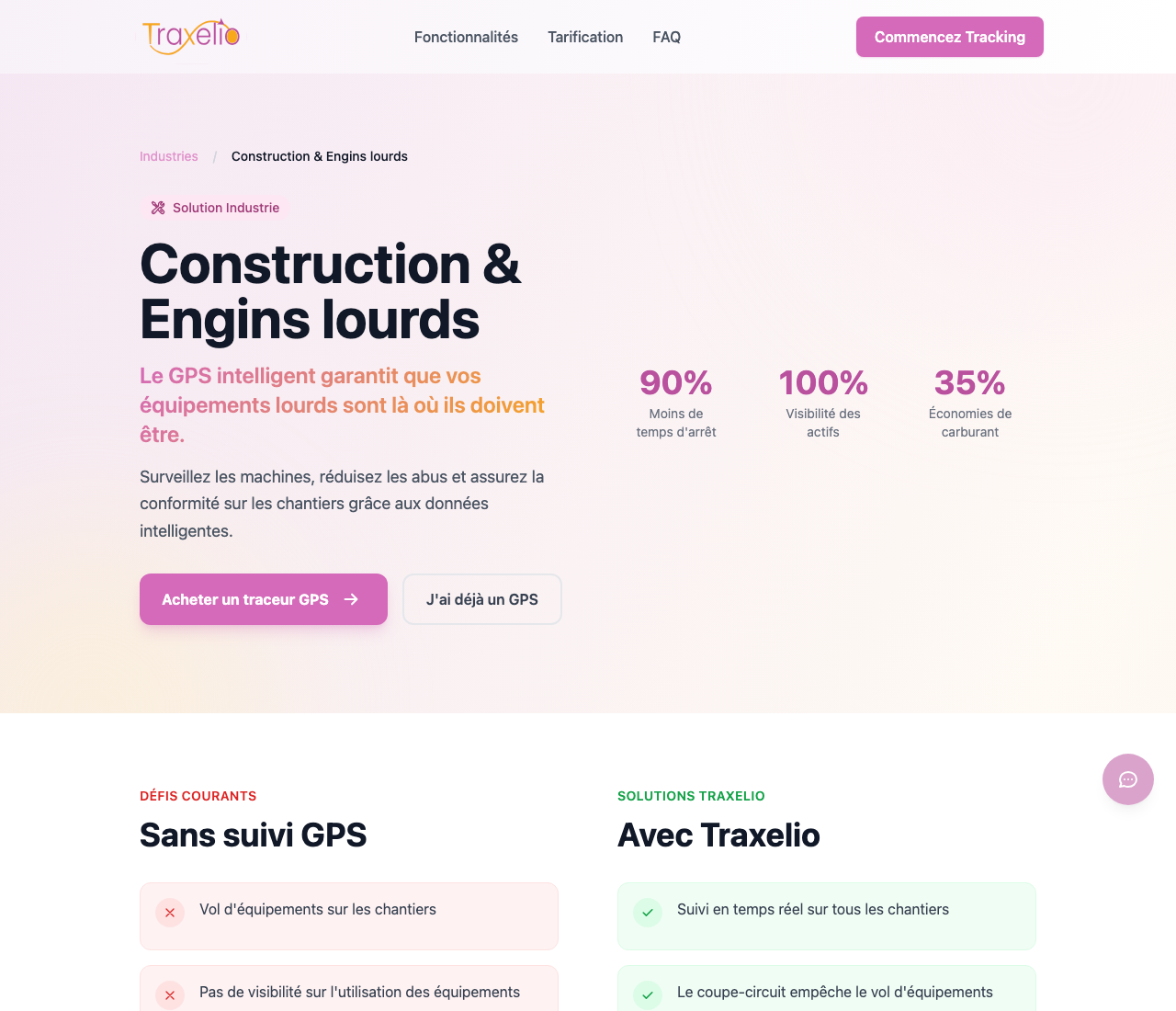
If you manage a fleet of bulldozers, excavators, loaders, or dump trucks across construction sites and mining operations in West Africa, you already know the stakes. Equipment worth hundreds of millions of CFA francs sits on remote, poorly secured job sites. Fuel disappears overnight. Machines break down at the worst possible moment. And you rarely have a clear picture of which assets are actually working and which ones are sitting idle.
GPS tracking is not new, but most solutions were designed for road vehicles, not heavy equipment operating in harsh, off-road environments. This guide breaks down how a purpose-built GPS tracking system can solve the specific problems construction and mining fleets face, with real features, real pricing, and real results.
The four problems costing you money every month
Whether you run a BTP firm in Dakar, a mining operation in Guinea, or a construction holding across multiple West African countries, the same four problems come up again and again.
1. Equipment theft and unauthorized use
Heavy equipment is expensive and surprisingly easy to steal. A loader left on an unguarded site overnight can vanish. Even when equipment is not outright stolen, unauthorized use is rampant: operators using machines for personal jobs after hours, or subcontractors borrowing equipment without permission. Without live visibility, you only find out when it is too late.
2. Underutilization and idle assets
A fleet of 100+ pieces of heavy equipment sounds impressive until you realize that 30% of them might be sitting unused on one site while another site is renting equipment externally. Construction companies routinely lose money because they cannot see, in a single dashboard, where every asset is and whether it is actually running. The result: unnecessary rental costs and capital tied up in machines gathering dust.
3. Unexpected breakdowns
When an excavator breaks down on a mining site 400 km from the nearest mechanic, the cost is not just the repair. It is the project delay, the idle crew, the missed deadlines, and the penalty clauses in your contract. Reactive maintenance, fixing things after they break, is the most expensive way to manage heavy equipment. Yet most fleets in the region still operate this way.
4. Fuel theft and waste
Fuel is the single largest operating expense for construction and mining fleets, and it is also the easiest line item to manipulate. Siphoning from tanks, inflated fuel receipts, and excessive idling can eat up 20-35% of your fuel budget. On a fleet burning millions of CFA in diesel every month, that is a staggering amount of waste.
GPS tracking adapted to construction and mining
Standard vehicle tracking gives you a dot on a map. That is useful for delivery trucks, but construction and mining fleets need more. You need to know:
- Is this machine actually running or just parked with the engine off?
- Has it left the authorized job site?
- How many hours has it operated this week versus last week?
- Is the engine showing early signs of failure?
- Who is responsible for this asset right now?
Traxelio was built to answer all of these questions. Our platform supports heavy equipment out of the box, with features specifically designed for the constraints of construction and mining: remote sites, harsh conditions, large fleets, and teams spread across multiple locations.
We recently worked with a BTP and mining holding in Guinea managing over 100 pieces of heavy equipment. Their challenges were textbook: no centralized visibility, frequent unauthorized use, unpredictable maintenance costs, and fuel budgets that never made sense. Here is how we addressed each one.
Geo-zones: one job site, one zone
The geo-zone feature lets you draw a virtual boundary around any location, whether it is a construction site, a quarry, a storage yard, or a maintenance depot. When any piece of equipment enters or leaves that zone, you get an instant alert.
For construction and mining fleets, this is transformative. You can:
- Prevent unauthorized movement. If a bulldozer leaves the quarry at 2 AM, you know immediately. No more discovering missing equipment days later.
- Track asset allocation across sites. See at a glance how many machines are on each job site. Rebalance assets before you spend money renting externally.
- Enforce subcontractor boundaries. If you lend equipment to a subcontractor for a specific site, geo-zones ensure it stays there.
- Automate reporting. Generate reports showing exactly how long each machine spent on each site, broken down by day, week, or month. This feeds directly into project costing.
One zone per job site is the simplest setup, but you can get granular. Create zones for specific sections of a mining concession, for fuel depots, or for maintenance areas. The alerts are configurable: SMS, email, or push notification, whatever works for your operations team.
For more on how GPS tracking helps with fleet optimization, see our guide on how to optimize fleet management with GPS.
Kill switch: stop equipment remotely
When you get an alert that an excavator just left the site at midnight, the next question is obvious: can you stop it? With the kill switch feature, the answer is yes.
The kill switch lets you remotely disable a vehicle or piece of equipment from the Traxelio dashboard or mobile app. The engine cuts off safely (the system waits until the machine is stationary to avoid dangerous situations), and the equipment cannot be restarted until you re-enable it.
For construction and mining fleets, this means:
- Immediate theft response. Stop a stolen machine before it reaches the border.
- Enforce operating hours. Disable equipment outside of approved work schedules to prevent unauthorized use and reduce wear.
- Protect during disputes. If a client or subcontractor has not paid, you can immobilize the equipment without sending someone to the site.
This feature alone has prevented significant losses for our clients. If you want a deeper look at anti-theft strategies, read our complete guide to GPS anti-theft and vehicle security.
Predictive maintenance: prevent breakdowns before they happen
Reactive maintenance is a trap. You wait for something to break, then scramble to fix it, losing days of productivity and paying premium rates for emergency repairs. Predictive maintenance flips this model.
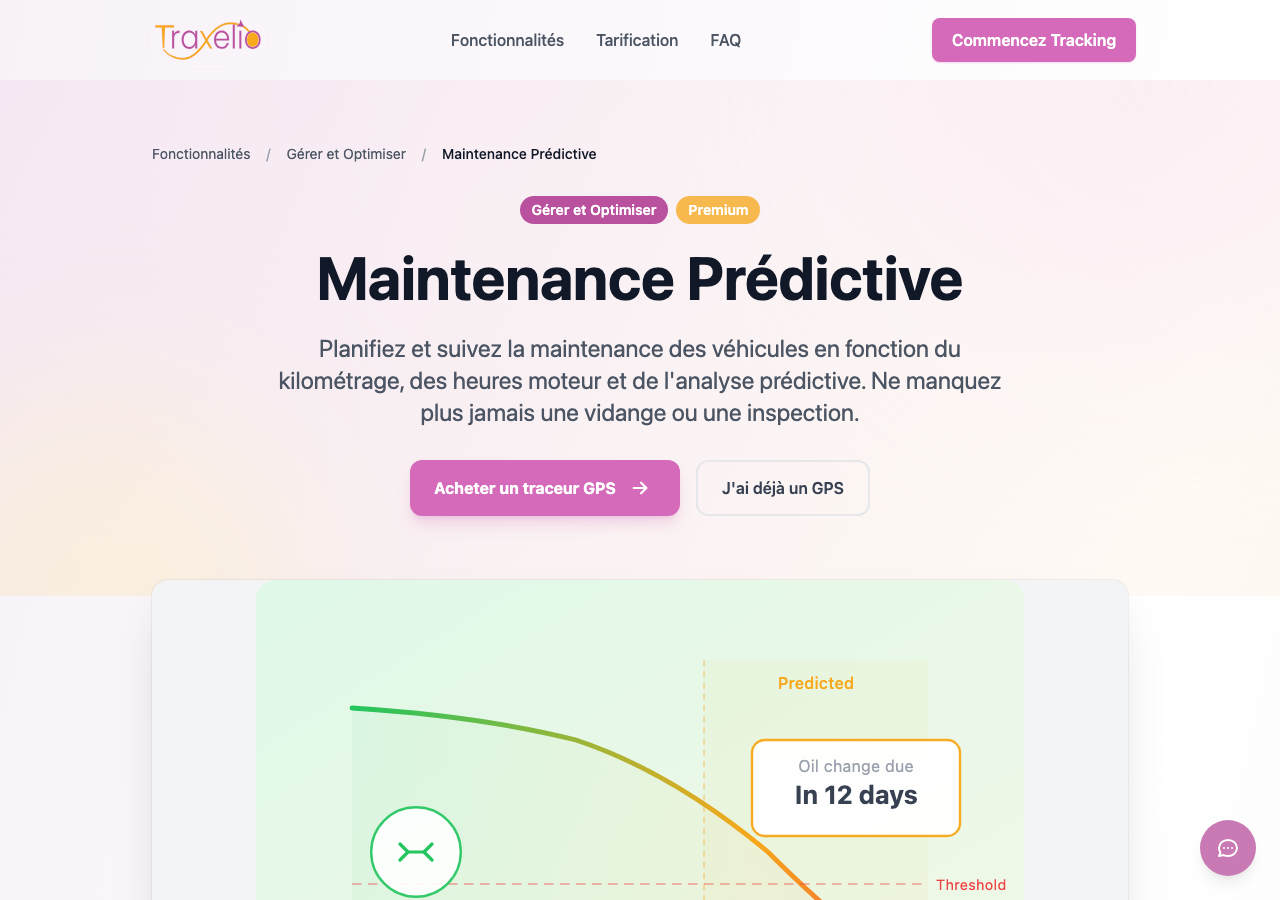
Traxelio tracks engine hours, mileage, and operating conditions for every piece of equipment. Based on this data, the system:
- Schedules maintenance automatically. Set thresholds (e.g., oil change every 250 engine hours) and the system alerts your maintenance team when service is due.
- Detects anomalies early. Unusual patterns, like a sudden increase in engine temperature or a drop in operating efficiency, trigger alerts before a full breakdown occurs.
- Keeps a complete maintenance history. Every service, every part replacement, every inspection is logged in the Documents Storage feature. When you sell or transfer a piece of equipment, the full history travels with it.
The impact is measurable. Fleets using predictive maintenance through Traxelio report up to 90% less unplanned downtime. For a mining operation where a single day of downtime on a critical machine can cost millions, this is not a nice-to-have. It is essential.
For a broader view of how GPS tracking creates value, check out the key benefits of a GPS tracking system.
Fuel management: idling detection and fuel probes
Fuel theft in construction and mining fleets takes many forms: direct siphoning from tanks, drivers filling personal vehicles during refueling stops, inflated receipts, and simple waste through excessive idling. Traxelio attacks all of these.
Over Idling Detection monitors when a machine's engine is running but the equipment is not performing useful work. For heavy equipment, idling is not just wasteful, it accelerates engine wear and burns through diesel at a surprising rate. The system flags machines that exceed your configured idle threshold, so you can follow up with operators and adjust schedules.
Fuel probes (available with compatible hardware) give you live fuel level readings. You can see exactly how much fuel is in each machine's tank at any moment, detect sudden drops that indicate siphoning, and reconcile deliveries against actual consumption. No more relying on paper logs and driver honesty.
Together, these features have helped clients achieve up to 35% fuel savings. On a fleet of 100+ machines, that translates to tens of millions of CFA francs recovered annually. We wrote a dedicated piece on how to reduce fuel fraud in your fleet with GPS if you want to go deeper.
Which plan for a construction fleet?
Traxelio offers three plans, each designed for different fleet sizes and needs. Here is how they break down for construction and mining operations:
| Feature | Basic | Premium | Platinum |
|---|---|---|---|
| Price | $9/mo | $29/mo | $299/mo |
| Smart Tracking | Yes | Yes | Yes |
| Kill Switch | Yes | Yes | Yes |
| Geo-Zones | 10 zones | 30 zones | 300 zones |
| Trip History | 15 days | 180 days | 365 days |
| Over Idling Detection | No | Yes | Yes |
| Predictive Maintenance | No | Yes | Yes |
| Curfew Alerts | No | Yes | Yes |
| Documents Storage | No | Yes | Yes |
| Team Access | 3 users | 10 users | 100 users |
| Best for | Small sites, basic visibility | Growing fleets, 10-50 assets | Large operations, 50+ assets |
For most construction and mining fleets, Premium is the right starting point. While Basic includes tracking, kill switch, and 10 geo-zones, Premium unlocks predictive maintenance, idling detection, curfew alerts, and 180 days of trip history. These are the features that drive the biggest cost savings. At $29 per month per asset, it pays for itself within the first month through fuel savings alone.
Platinum is designed for large holdings managing 50+ pieces of equipment across multiple sites. Full team access means you can give site managers, maintenance crews, and finance teams each their own view of the data. The dedicated support and advanced reporting features are built for operations at scale.
We recently rolled out several improvements to the platform that benefit construction fleets specifically. See the changelog for the latest releases.
What this means for you
If you are running a construction or mining fleet in West Africa, the math is straightforward. Between equipment theft, fuel waste, unplanned downtime, and poor asset utilization, most fleets are losing 15-25% of their operating budget to problems that GPS tracking solves directly.
The numbers from our clients tell the story:
- 90% reduction in unplanned downtime through predictive maintenance
- 100% asset visibility across all sites and locations
- 35% fuel savings through idling detection and fuel monitoring
You do not need to track everything at once. Start with your highest-value assets or your most problematic site. See the results. Then expand. Traxelio scales from a single machine to fleets of hundreds, with the same dashboard and the same team managing it all.
Ready to see what live tracking looks like for your fleet? Get started with Traxelio and we will help you set up your first geo-zone within 24 hours.