
If you have teenagers learning to drive or younger kids walking to school, you know the feeling: a knot in your stomach until they text you "I'm here." GPS tracking, which we originally built for fleet managers, turns out to solve this exact problem for families too. Here is what we have learned from parents who use Traxelio to keep their children safe.
The Real Challenge: Balancing Safety and Independence
Your child needs freedom to grow. But you also need to know they are safe. Calling every 20 minutes is not the answer. It damages trust, annoys your teenager, and still leaves gaps where you have no idea where they are.
What parents actually need is quiet, passive visibility. The ability to glance at a map and confirm everything is fine, without interrupting anyone.
How Live Tracking Changes the Dynamic
Live tracking shows your child's position on an interactive map, updated every 10 seconds. No calls, no texts, no interruptions.
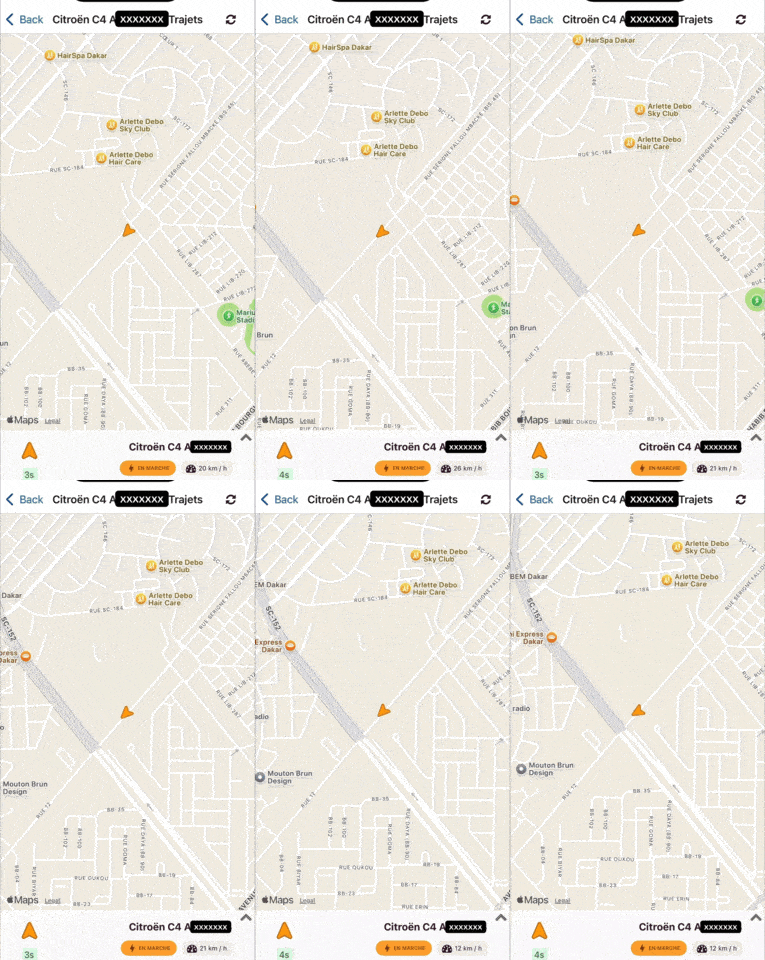
We see parents use this in two ways. Some check once when school lets out and once at bedtime. Others set up alerts and only look at the map when something unusual happens. Both approaches work because the data is always there when you need it.
For families with multiple vehicles, tracking also tells you which car your teen is driving and where they are headed. If you are also considering protecting the family car itself, our GPS car tracker price guide breaks down the real costs.
Geofencing: Automatic Alerts for the Places That Matter
Geofencing is the feature parents tell us they value most. You draw a virtual boundary around a location (school, home, the sports club) and get an instant alert when your child enters or leaves.

Practical uses we see every day:
- School attendance: get notified if your child leaves campus during class hours
- After-school activities: confirm they arrived at practice or tutoring
- Night-time security: alert if a teenager leaves the house after curfew
- Off-limits areas: flag trips to locations you have discussed as off-limits
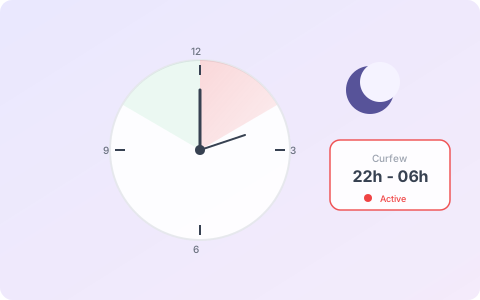
For time-based restrictions, the curfew feature alerts you when a tracked vehicle moves outside authorized hours. Perfect for families with teen drivers who have a "home by 10 PM" rule.
Trip History: Facts Instead of Arguments
Trip history records every route, stop, and duration. Did your child go directly from school to their friend's house? How long was the drive? The data answers these questions without anyone needing to explain themselves.
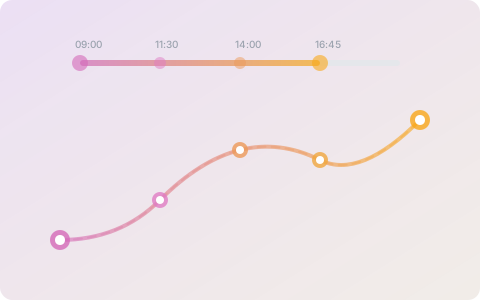
We have found that families who share trip history openly have fewer arguments about where someone was. The data removes guesswork and the "I don't believe you" dynamic that poisons trust.
Driving Behavior Scores for Teen Drivers
For parents of new drivers, this is the feature that provides the most peace of mind. Driving behavior monitoring tracks:
- Hard acceleration and harsh braking events
- Speeding above speed limits you set
- Sharp cornering that indicates aggressive driving
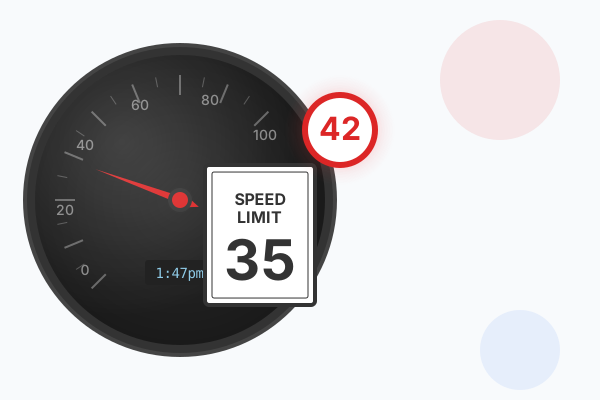
Each driver gets a safety score based on these metrics. Instead of lecturing, you can show your teenager their actual data and have a fact-based conversation. "Your braking score dropped this week, let's talk about why." Our complete guide to driver scores explains how the scoring works.
Quick Response in Emergencies
When something goes wrong, seconds matter. Alert notifications give you immediate location data if a child gets lost, has a breakdown, or needs help.
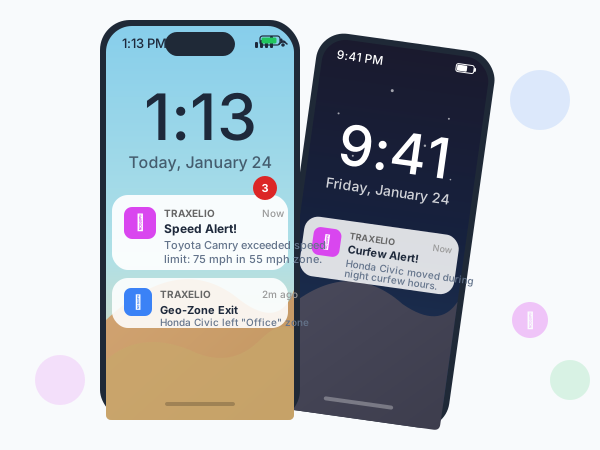
Combined with a remote kill switch, parents whose teenagers are driving can even cut the engine remotely in case of theft. We built this for fleet managers recovering stolen vehicles, but parents tell us the peace of mind alone is worth it.
What to Look for in a Family GPS Tracker
Not all trackers are equal. Based on what we see working for families, here is what matters:
| Feature | Why It Matters for Families |
|---|---|
| Live tracking | Know where your child is right now, not ten minutes ago |
| Geofencing | Automatic alerts when they leave safe zones |
| Alert notifications | Instant push notifications for speed, movement, boundaries |
| Curfew monitoring | Detect movement outside authorized hours |
| Trip history | Review past routes and stops |
| Driving behavior | Safety scores for teen drivers |
| Access sharing | Both parents can monitor from their own devices |
| Web platform | Works on phone, tablet, and computer, no app required |
A good tracker should be simple enough that you never need to read a manual. If setting up a geofence takes more than 2 minutes, the product is not designed for you.
For a detailed comparison of devices available in Senegal, see our guide to the best GPS trackers and the complete guide to modern GPS trackers.
A Note on Privacy and Trust
GPS tracking for children works best as part of an open conversation. We always recommend being transparent with your kids about tracking. The goal is shared peace of mind, not surveillance. Children who understand why tracking exists tend to see it as a safety net rather than a leash.
For parents concerned about data privacy, here is how Traxelio protects personal data on all public-facing pages.
Getting Started
Whether your child walks to school, takes public transport, or has just started driving, a GPS tracker gives you the information you need to worry less and respond faster when it matters.
At Traxelio, family tracking starts at $17/mo per vehicle, with the device at $40 and professional installation at $24. The Premium plan at $29/mo adds 180 days of trip history and driving behavior scores, which most parents prefer.